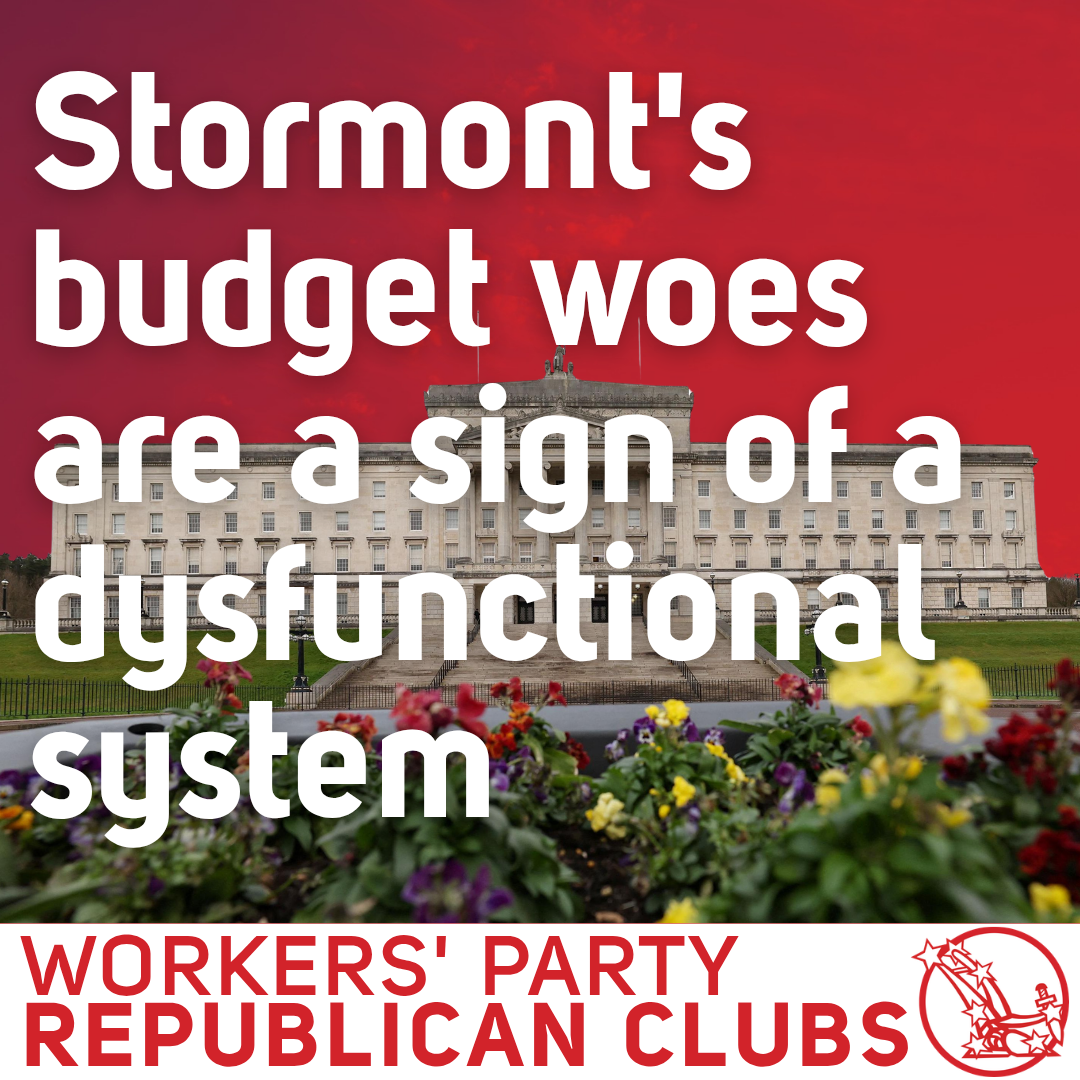
Stormont’s struggles to balance the budget confirms what working class communities already know: the system is not fit for purpose.
Public services are being hollowed out before our eyes. Hospital waiting lists are disgracefully long. Schools are cutting provision. Public sector workers are forced to fight for pay that barely keeps pace with inflation. At the same time, families are being crushed by soaring grocery bills, sky-high rents and a chronic shortage of public housing.
And still we are told there is no money.
There is no money for nurses, classroom assistants or carers — but there is always money to prop up private developers, consultants and corporate interests. There is no serious plan to build the volume of public housing required to drive rents down. Instead, Stormont manages growing waiting lists while private landlords continue to increase rents unchecked.
The north of Ireland has repeatedly required emergency financial interventions and short-term so-called rescue packages from Westminster. That is not stability — it is a political system lurching from crisis to crisis. Unlike Scotland and Wales — operating under the same Treasury framework but with greater political continuity — Stormont has compounded structural underfunding with repeated collapse and paralysis.
This is not simply mismanagement. It is systemic failure.
Stormont was designed to manage division; it has become a mechanism for managing austerity. It balances Treasury limits while working class communities absorb the cuts. It has proven incapable of delivering the scale of public housing construction, wage growth, service investment and democratic economic planning that society urgently needs.
We need systemic change — not another temporary bailout. That means major investment in public housing, rent controls, properly funded public services, expanded public ownership and genuine fiscal powers to end permanent dependency.
And we must say this clearly: the current model of power-sharing has not delivered economic transformation because it remains rooted in sectarian designation and tribal bloc politics. As long as politics is structured around communal division rather than class, it will continue to produce stalemate, short-termism and managed decline.
Working people deserve a government that represents their class interest — not as sectarian voting blocs. Until that changes, Stormont will continue to fall short of what society requires.